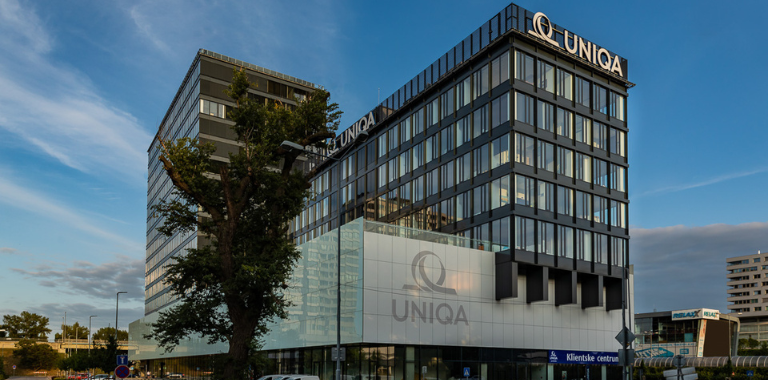
What happens when managers do something simple, personal and unexpectedly powerful — and call unhappy customers themselves? At UNIQA Czechia and Slovakia, this question has become a success story.
What started as a small voluntary initiative has grown into a meaningful leadership practice: managers personally call customers who have had a poor experience, listen to their concerns and take their feedback seriously.
In doing so, they turn customer dissatisfaction into something much more valuable — dialogue, insight and often a first step toward improvement.
It is a simple idea, but one with real impact. By bringing leaders closer to the customer’s everyday reality, the initiative strengthens understanding, sharpens decision-making and supports UNIQA’s broader ambition to raise service quality and customer satisfaction.
From an idea to a movement
The idea began to take shape in late 2022. At first, the programme was offered as a good practice to volunteers from the Management Board and B-1 level. The ambition was clear: to better understand what dissatisfied customers were experiencing, show them that their feedback was truly being heard, and capture insights that could help improve products, processes and communication.
The first group of pioneers was informally called “The Magnificent 15” — a playful nod to the famous film, but also a sign that this was something new. And those 15 managers really did start calling.
At the beginning, progress was naturally slower. The activity was voluntary, not yet part of formal target setting, and it required both courage and commitment. But the value was evident from the start: once managers heard customers directly, the feedback stopped being abstract. It became personal, immediate and much harder to ignore.
Rastislav Havran, CEO: Before the first phone call, I felt uncertain. I was stepping into unfamiliar territory and did not know how a dissatisfied client would react. However, I was overwhelmed by the positive reaction by the customer. The customer was pleasantly surprised that I knew about the problem, that I took an interest in the customer as a person, and that I want to learn from our mistakes and continue improving our services based on customer feedback. And the main takeaway? We should treat our customers as our partners who are more than willing to help. All it takes is the courage to ask.
Making it work behind the scenes
Although the idea sounds straightforward, building the programme took a great deal of groundwork.
There were practical, legal and organisational questions to solve: how to work with customer contacts in full compliance with GDPR, how to provide managers with technical access, how to prepare them for sensitive conversations, how to ensure alignment with the Insurance Distribution Directive, and how to capture insights from the calls in a useful way.
All of this had to be prepared not for a handful of people, but eventually for more than 120 managers.
The initiative was designed and coordinated by Lada Brejnikova, Customer Experience Expert, who has led the project from the beginning. Her work helped transform an interesting idea into a functioning system that could grow and scale across the organisation.
Leadership support made the difference
A key role in moving the initiative forward was played by Rastislav Havran, CEO of Czechia and Slovakia, who championed the idea and actively drove its implementation across the organisation.
By speaking openly about his own customer calls and expectations in internal meetings and employee forums, he helped make the initiative visible, credible and relevant - calling dissatisfied customers was not a side activity — it was a meaningful way to live customer focus in practice.
From 1 July 2024, the initiative became an official target for managers from Board level to B-2. Since 2025, the target has been to call 18 customers per year, with each call lasting more than one minute.The development has been impressive: 1,200 calls in 2024 and 1,752 calls in 2025. These numbers tell one side of the story. The other is what happens within the calls themselves: frustration can be acknowledged, misunderstandings clarified, and ideas for improvement captured while the experience is still fresh.
Monika Šimkovičová, Head of Compliance: One call that stayed with me was with an elderly client who rated us one star after a difficult property claim experience. He had struggled to reach our contact centre and never received the promised follow-up, which left him frustrated and forced him to resolve the situation through an intermediary.
At the beginning of the conversation, he was still upset, so I focused on listening and understanding his perspective. We spoke for almost 25 minutes, and by the end, his tone had changed significantly. What made the biggest difference for him was being heard — speaking to a real person who took the time to listen and care about his experience. For me, it was a clear reminder that behind every piece of feedback is a human story, and that genuine listening can be just as important as the solution itself. This is what true customer care means — being present, taking responsibility, and showing that every customer truly matters.
Listening where it matters most
The customers selected for these calls are those who gave UNIQA 1 to 3 stars in the Voice of the Customer survey and added a written comment. Managers can choose from a pool of around 600 customers, filtered by journey, age, business model and other criteria. The pool is continuously refreshed to ensure new and relevant feedback. Importantly, the process begins before the manager call itself. Customer feedback is first handled internally through a close-the-loop process. Only then is it assigned for follow-up by a manager. This gives the calls a clear purpose: they are not just symbolic gestures, but part of a broader effort to understand what happened, respond thoughtfully and learn from it. And that is what makes the initiative so strong. It creates a bridge between customer experience data and human conversation. Between reporting and reality. Between leadership and the people UNIQA serves every day.